
What Should You Pay for a Car? Check the Market Price Before You Talk to a Dealer
Walk in with two numbers: what the exact car sells for near you, and what you can afford out the door. Here is how to find both, turn them into one target price, and hold it.
Miles
Former dealer insider
Most people start car shopping with one number in mind: a monthly payment. It feels like the right number, because it is the one that has to fit your life. But it is the number the dealer is happiest to hear, because a payment can be hit a dozen ways, and most of them cost you more.
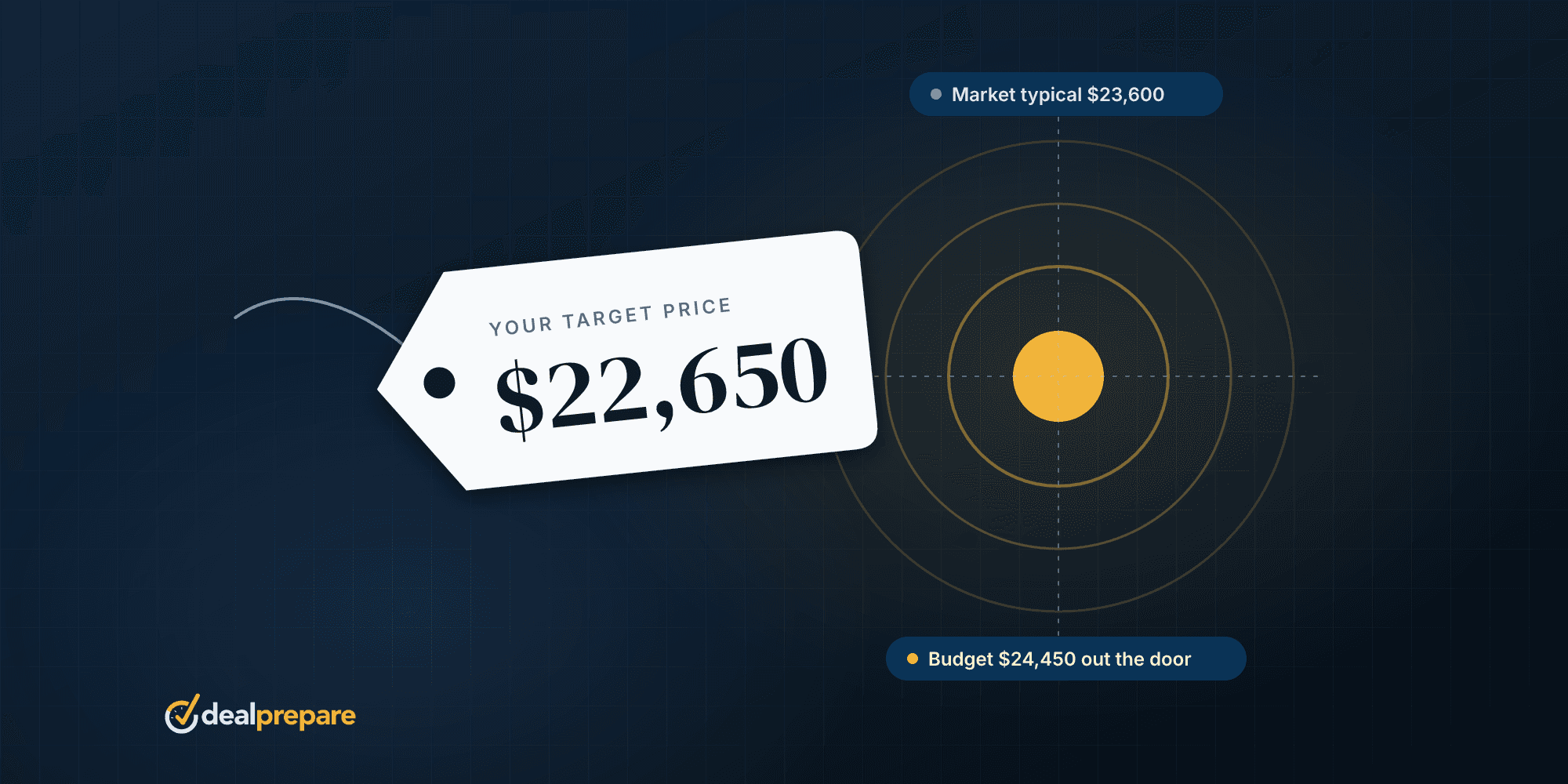
Walk in with two different numbers instead. What the exact car you want actually sells for near you. And what you can afford to pay for it, out the door. Put them together and you get the only number worth bringing to a dealer: your target price.
Number One: What the Car Is Selling For
The market price is the one reference point the dealer does not control. Sticker, budget, and payment can all be moved. What comparable cars are selling for this week cannot.
For a new car, start at the MSRP for the exact trim and packages, then ask two questions:
- Where are comparable cars actually listed? Plenty of models sell under sticker. A few still sell at or above it. Listings for the same trim near you tell you which kind of car you are shopping.
- What incentives are active? Rebates, promotional rates, and loyalty cash come from the manufacturer and change monthly. A price that ignores an active rebate is not the market price.
Invoice price sounds like a better anchor, but it is harder to use than it looks. Holdback and factory money mean the dealer's real cost sits below invoice, and you cannot see either one. The market is the number you can actually verify.
For a used car, there is no sticker to start from. The market is the comparable listings, matched on year, trim, mileage, and region, plus what the value guides say. Twenty thousand miles or a different trim can move the price by thousands, so match closely before you trust a comparison.
Our guide to checking if a car price is fair goes deeper on reading listings: the floor, the middle, and the spread. Or skip the tabs and let Miles run the search:
Number Two: What You Can Afford, Out the Door
The out-the-door price is everything you pay: the vehicle, the fees, and the taxes. It is the only total that matters, and it is where your budget belongs.
Work backward from the payment you are comfortable with. You need four inputs: the payment, the interest rate you qualify for, the loan term, and your down payment. Here is one example:
| Input | Value |
|---|---|
| Monthly payment | $450 |
| Rate | 7.5% APR |
| Term | 60 months |
| Down payment | $2,000 |
| Amount you can finance | about $22,450 |
| Out-the-door budget | about $24,450 |
| Vehicle price after about 8% for tax and fees | about $22,650 |
The affordability calculator runs the same math with your numbers. Two things change the answer more than people expect:
- Your rate. Get pre-approved by a bank or credit union before you shop. It tells you the rate you actually qualify for, and it gives you a number to hold against whatever the finance office offers. See what a good APR looks like for your credit tier.
- Your trade-in. What matters is the equity: an outside offer for your car minus what you still owe on it. Positive equity adds to your budget. Negative equity comes out of it, because the new loan has to cover what you still owe. Get a written offer from a CarMax, Carvana, or similar buyer first, so the dealer's trade number has something to beat.
Notice what is not on this list: the loan term. Stretching to 72 or 84 months makes almost any car fit the payment. That is how a budget quietly turns into thousands in extra interest.
Put the Two Numbers Together
Now compare them.
If your budget covers the market price, you have room. Aim for the low-to-middle part of the comparable range, not the top of your budget. The market sets the price. Your budget only sets the ceiling.
If your budget falls short of the market price, the fix is the car, not the loan. A lower trim, a model year older, a certified used version of the same car, or a few weeks' wait for an incentive will all close the gap more cheaply than a longer term.
Then write down two numbers before you talk to anyone:
- Your target price. What you expect to pay for this car, based on the market.
- Your walk-away price. The most you will pay, out the door, before you leave and try the next dealer.
Ask for the Out-the-Door Price in Writing
When you contact dealers, ask for one thing: the out-the-door price, itemized, in writing. Email works well. It keeps every dealer on the same total, it puts fees on paper before you are sitting in the showroom, and it makes quotes easy to compare. For the conversation itself, our negotiation guide covers what to say.
A quote that only talks about the payment is not an answer. Ask again for the total.
Where Miles Fits
Miles is built for exactly this stretch, before and after the quote arrives.
- Before the quote, the free market check gives you number one in about a minute, with the listings behind it. Sign up and Prepare with Miles keeps your cars, your trade, your budget, and your priorities in one place, and Miles helps you set a target and plan the conversation. Free.
- When the quote arrives, scan it. Miles checks the price against the same market research and reads every fee, add-on, and rate on the page. Your first scan is free.
Knowing your number before the dealer names theirs is the whole game. Now you have yours.
Frequently asked questions
- How do I find the market value of a new car?
- Start with the MSRP for the exact trim and packages, then check what comparable new cars are actually listed for near you and which manufacturer incentives are active this month. If listings cluster below sticker, the market is below sticker. DealPrepare's free market check does this search for you: type the car and your ZIP and Miles shows the typical price near you, with the listings he used.
- Is MSRP negotiable in 2026?
- On most models, yes. MSRP is the manufacturer's suggested price, and many cars sell below it, often with a rebate on top. A few high-demand models still sell at sticker or above. The way to tell is to compare listings for the same trim near you: if they sit below sticker, a quote at sticker leaves room to negotiate.
- How much car can I afford?
- Work backward from the monthly payment you are comfortable with, your interest rate, the loan term, and your down payment. For example, $450 a month for 60 months at 7.5% with $2,000 down supports about $24,450 out the door, which is a vehicle price near $22,650 once roughly 8% goes to tax and fees. The DealPrepare affordability calculator runs this math for your numbers.
- What is a good out-the-door price for a car?
- One where the vehicle price sits at or below the middle of comparable listings near you, the fees match your state's typical charges, and nothing is in the total that you did not ask for. Ask every dealer for the out-the-door price in writing so you compare the whole number, not just the payment.
- Should I tell the dealer my budget?
- Tell them your target price, not your monthly payment. A payment can be met by stretching the term or adding back fees, so it tells the dealer how much room they have. A price anchored to the market tells them you already know what the car is worth.
Put this advice to work
Upload your dealer quote and Miles will flag the markups, junk fees, and add-ons before you sign anything.
Scan your quote freeNo quote yet? Check the market price free